Good patient service at the front desk comes down to a few simple standards that the whole team follows the same way: how fast they answer the phone, how they greet a patient at the desk, how they protect patient data and what they say in difficult situations. Add 3 metrics to that, so the written standard doesn't end up in a binder after a month.
Patients talk to the front desk at the start and at the end of every visit, so they write about it in their Google reviews right next to what they say about the doctor: "the lovely lady at reception" or "nobody answered the phone for two days".
What patient service standards should a medical front desk have?
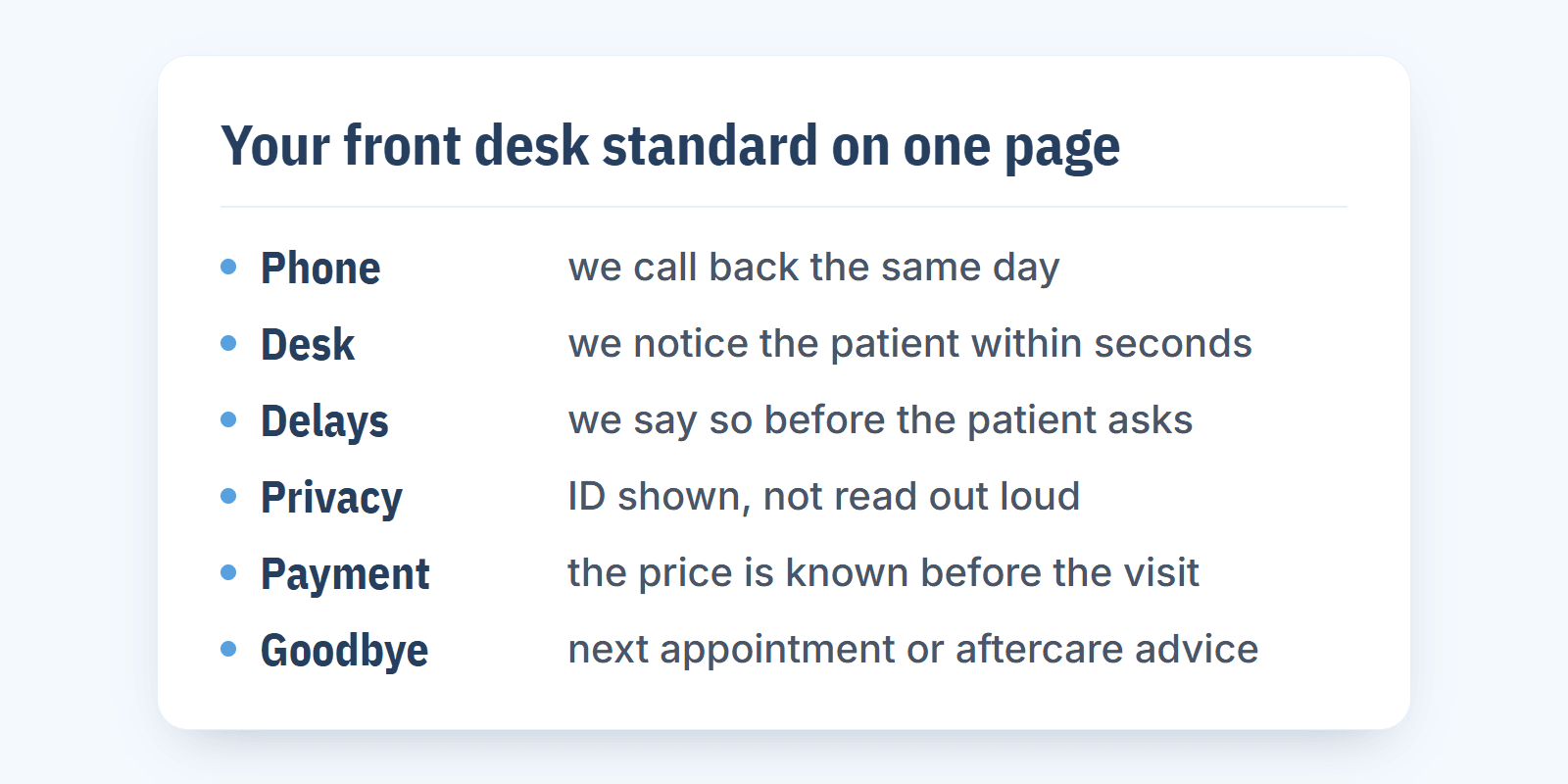
One page with 6 points is enough: phone, greeting at the desk, information about waiting times, confidentiality, payment and the goodbye. The numbers below are examples you can adjust to your clinic. What matters more is that everyone at the front desk sticks to the same ones.
Phone: answer time, greeting and call-backs
The phone standard is one number, e.g. "we answer by the fourth ring", plus one short shared greeting with a name: "[Clinic name], reception, Anna speaking. How can I help?"
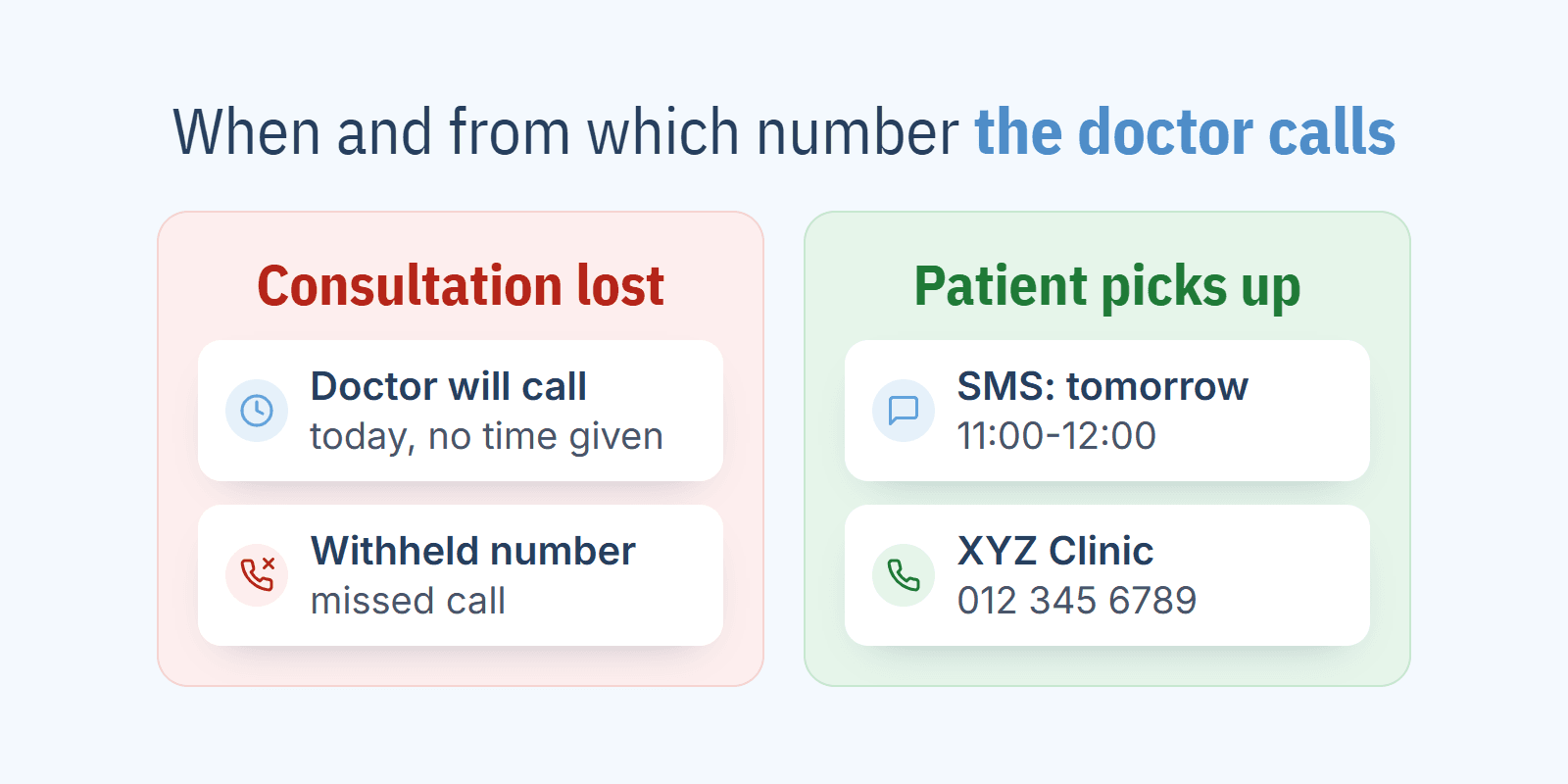
A clinic loses patients most easily through missed calls, which is why I consider call-backs the most important standard: the front desk calls back the same day everyone who rang during opening hours and didn't get through, and it's one named person's job. A patient nobody called back has often already booked wherever someone picked up.
The desk: greeting and waiting time
A patient who walks up to the desk knows within a few seconds that someone has noticed them. If the receptionist is on the phone, eye contact and "I'll be with you in a moment" are enough.
The second standard is about waiting: the patient knows how long they'll wait. When a doctor is running more than, say, 15 minutes late, the front desk says so first, before the patient comes over to ask. You'll find ready-made lines for that conversation in the guide to patient communication in a medical practice.
Confidentiality at the desk
There are usually several people standing at the desk, so a conversation about symptoms, a referral or a test result is heard by the whole queue, which has nothing better to do at that moment. Doctors are bound by medical confidentiality, and in Poland, for example, the Patients' Rights Act extends that duty to everyone authorized to handle patient data, which often includes the front desk.
In practice, small things help:
a line on the floor or a marked spot where the next person waits,
a monitor turned so that nobody in the queue can see patient details,
a receptionist who says the names of tests and diagnoses more quietly and moves a longer conversation to a consulting room or a separate counter,
asking for an ID document instead of having the patient read out their ID number.
The details of the procedure, e.g. what the front desk can share over the phone and with whom, are something the clinic agrees with its data protection officer.
Payment and the goodbye
The patient knows the price before the visit, and extras (a test, anesthesia, materials) are on a price list the front desk has at hand. A dispute at checkout usually starts with an amount nobody said out loud beforehand.
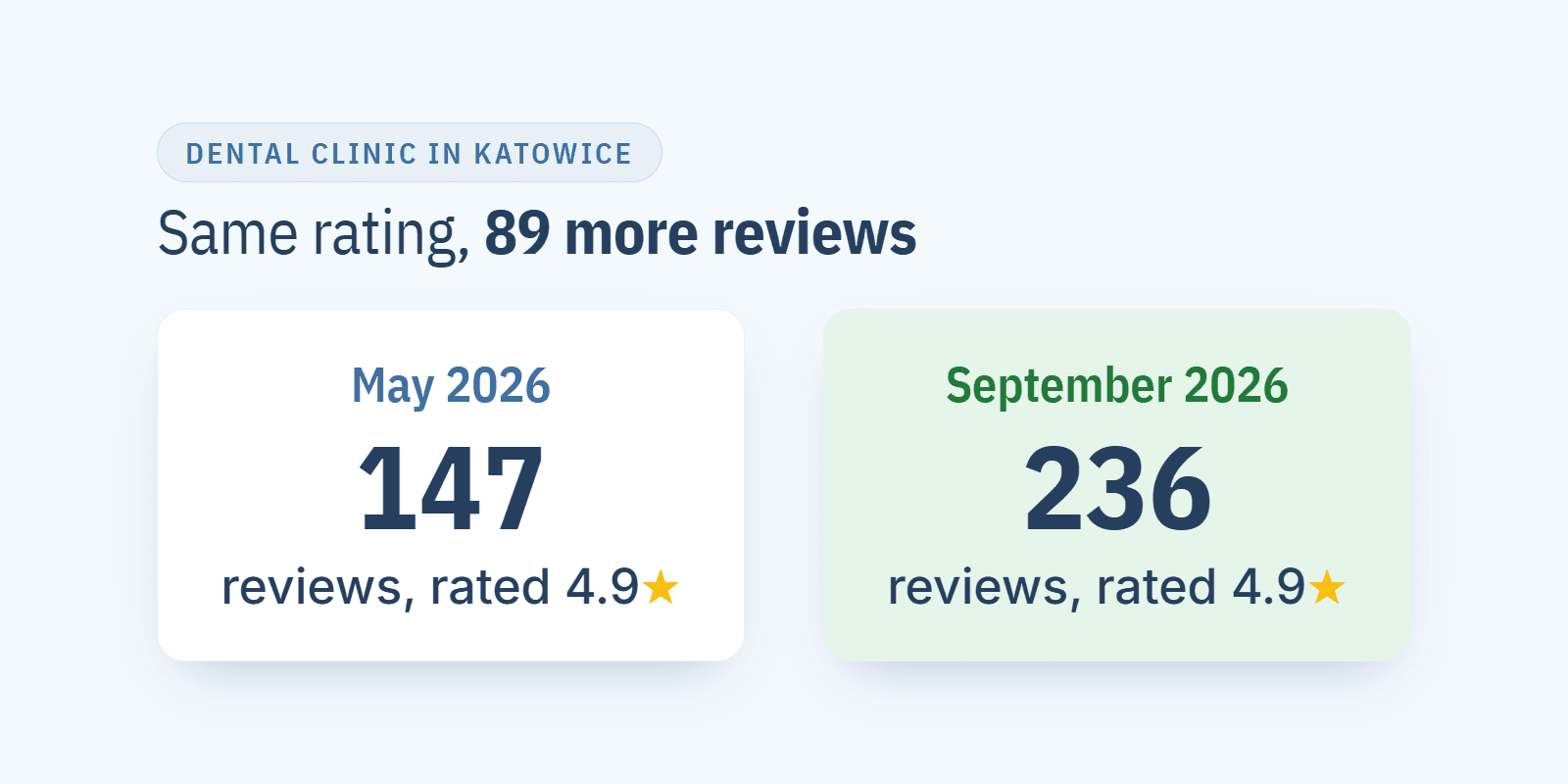
The goodbye takes one sentence: the next appointment or the doctor's advice, and "goodbye". Owners often want the front desk to ask for a Google review at the goodbye as well, and I've seen up close how that ends: after a few weeks the front desk stops, because there's no time for it and many people simply feel awkward asking. Not even a bonus changes that: a small clinic in Poland paid its front desk PLN 5 for every review and collected 26 of them in 8 years. It's much easier for the front desk to mention a text message the clinic will send the next day, because then they don't ask the patient for anything at the desk, and the patient gets the actual request with the link by SMS:
"We collect feedback from our patients. Tomorrow at around {time} you'll get a text message from us. We'd really appreciate it if you could find a moment to leave a review."
I show how to send texts like that without extra work for the front desk in a comparison of 4 ways to collect Google reviews automatically.
How should the front desk handle a difficult patient?
The same order helps in every situation: listen to the end, name the problem and offer a specific next step with a time frame. A "difficult patient" is usually a patient in a difficult situation: tired of waiting or surprised by the bill.
A patient upset that the doctor is running late
"You're right, you've been waiting 40 minutes already. There's one more person ahead of you, so about 15 minutes. If you'd prefer another appointment, I'll find one for you now."
An upset patient calms down faster when the receptionist agrees with them than when they hear why it happened. And what helps most is a specific number of minutes.
A patient who is late or didn't turn up
The patient should know the rule in advance, e.g. from the conversation when they booked or from the confirmation text: if they're more than 15 minutes late, the doctor may shorten or reschedule the visit. Then the front desk only has to remind them of the rule: "Your appointment was at 10:00, and as you're more than 15 minutes late, the doctor won't be able to see you before the next patient. I can book you in today at 12:40 or tomorrow morning. Which would you prefer?"
A patient who didn't turn up gets a call from the front desk the same day, without any blame, with an offer of a new appointment. Often the patient simply forgot, and a call like that is the easiest way not to lose them.
A dispute over the bill at checkout
"I understand the amount is higher than you expected. The bill includes the consultation and the ultrasound the doctor suggested during the visit. I'll ask the doctor whether they discussed the cost with you, and the practice manager will call you back tomorrow by 12:00."
The front desk doesn't negotiate prices or promise refunds, so it needs a clear rule for when a case goes to the manager and who calls back.
A patient who has to see a doctor today
"The doctor has no free slots today, the next one is on Thursday at 9:20. I'll also ask the nurse whether, with these symptoms, you should come in today. If you suddenly feel worse, please call the emergency number."
Whether a case is urgent is for the medical staff to decide. The receptionist has a simple rule for who takes over a patient with worrying symptoms (a nurse, the doctor on duty), so they don't have to make that call themselves.
The phone is ringing and there's a queue at the desk
The patient at the desk comes first, but the phone can't ring forever either, so the receptionist answers briefly: "Good morning, reception. I'm with a patient right now, can I call you back on this number within 15 minutes?". Then they note the number and call back.
If every day looks like this, the problem lies in how the work is organized, and the receptionist won't solve it by being polite. I'd start by splitting roles at peak times (one person on the phone, another at the desk), and only then think about moving some of the calls to an outsourced answering service. A receptionist with a phone at their ear and five people at the desk is doing two jobs at once for one salary.
How do you measure the quality of front desk service?
3 metrics checked once a month are enough: calls, complaints and patient ratings. Without them, every conversation about service quality ends with "I think it's got better".
Calls. The share of calls answered and the average call-back time. If the clinic has a cloud phone system, the practice manager will find this data in its dashboard.
Complaints. The front desk logs them in one place and assigns each one to a single category: waiting time, price, courtesy, phone. After 3 months, the manager will see what patients complain about most often.
Patient ratings. Google reviews in which patients write about the front desk, the results of a patient satisfaction survey and visit ratings from text messages, if the clinic asks for them.
Every few months I'd also run a mystery patient check: someone from outside the team calls, books online and sends an email following set scenarios, then rates the service on a scoresheet.
FAQ
What are a medical receptionist's duties?
Booking patients in for visits (by phone, in person and online), looking after patients at the desk, giving information about prices and waiting times, taking payments and keeping the clinic's admin records. In many clinics this also includes calling patients back, confirming appointments and selling treatment packages.
How do you train the front desk in patient service?
To start, the team needs its own one-page standard and should practice the 5 difficult situations from this article in pairs. After that, the team spends 30 minutes once a month going through complaints, missed calls and reviews that mention the front desk. External patient service training makes sense as an extra, once the team already knows its own standards.
Can the front desk talk about a patient's health in front of other patients?
It shouldn't. Health information is confidential, so the receptionist says the details more quietly or moves the conversation to a consulting room. Over the phone, the front desk gives information only to the patient or someone they have authorized, following the clinic's procedure.
Does an outsourced phone answering service improve patient service?
It can take the load off the front desk at peak times, when the same person is handling both the queue and the calls. Service at the desk and the first impression stay in the clinic, so you need standards for the on-site front desk either way. I cover outsourced reception, voicebots and what their price depends on in the article on virtual receptionists for medical practices.